AI Engineering Proficiency Quiz
For Software Engineers
Test your technical depth on AI/ML concepts — from transformer architecture and embeddings to RAG pipelines, inference optimization, security, and production system design. 20 questions, AI-evaluated.
Ready to test your knowledge?
20 questions · 20–25 minutes · Advanced
You'll need your email address to receive results. Multiple choice answers can be changed before submitting. Written answers are evaluated by AI.
Before you start
Free · No account required · Results emailed instantly
👤 Who is this for?
Built for software engineers, backend engineers, ML engineers, and AI/LLM application developers who build or integrate AI systems. Ideal for engineers preparing for AI-focused interviews, evaluating their own knowledge gaps, or onboarding onto AI product teams.
💡 Why AI literacy matters
LLM engineering is now a core competency for software engineers across the industry. Understanding inference optimization, security boundaries, RAG architecture, and evaluation methodology separates engineers who can ship reliable AI systems from those who ship fragile demos.
Topics Covered in This Assessment
Frequently Asked Questions
What AI/ML skills should software engineers have in 2025?
In 2025, software engineers should understand transformer architecture, tokenization, embeddings, vector databases, RAG pipeline design, fine-tuning techniques (LoRA, QLoRA), inference optimization (quantization, KV cache, speculative decoding), prompt injection security, and how to design observable, scalable AI systems.
Is this a good test for LLM engineering interview prep?
Yes. The quiz covers the exact concepts that come up in AI/ML engineering interviews: architecture fundamentals, inference optimization, system design tradeoffs, RAG, fine-tuning, and security. The open-ended questions mirror real system design interview prompts.
Do I need a math background to take this quiz?
No heavy math required. The quiz tests conceptual and applied engineering knowledge — understanding what techniques do and when to use them — rather than deriving equations.
Related Topics
Ready to build AI-powered products?
100+ AI Tools for Students and Professionals
Or Create Your Own AI Tool in Seconds
How educators and students are using Miskies AI:
Aisha K: "I generated notes from a 2-hour lecture".
Tamara R: "I created a full quiz from a textbook chapter".
James R: "I got a visual breakdown of photosynthesis".
Sofia M: "I organised all my assignments in one place".
Amy P: "I turned a video documentary into lesson notes".
Aisha K: "I generated notes from a 2-hour lecture".
Tamara R: "I created a full quiz from a textbook chapter".
James R: "I got a visual breakdown of photosynthesis".
Sofia M: "I organised all my assignments in one place".
Amy P: "I turned a video documentary into lesson notes".
No code. No complexity. Just better learning.
See It in Action
It's really that easy to study with AI tools on Miskies AI.
Building an AI tool to review an uploaded resume based on your knowledge.
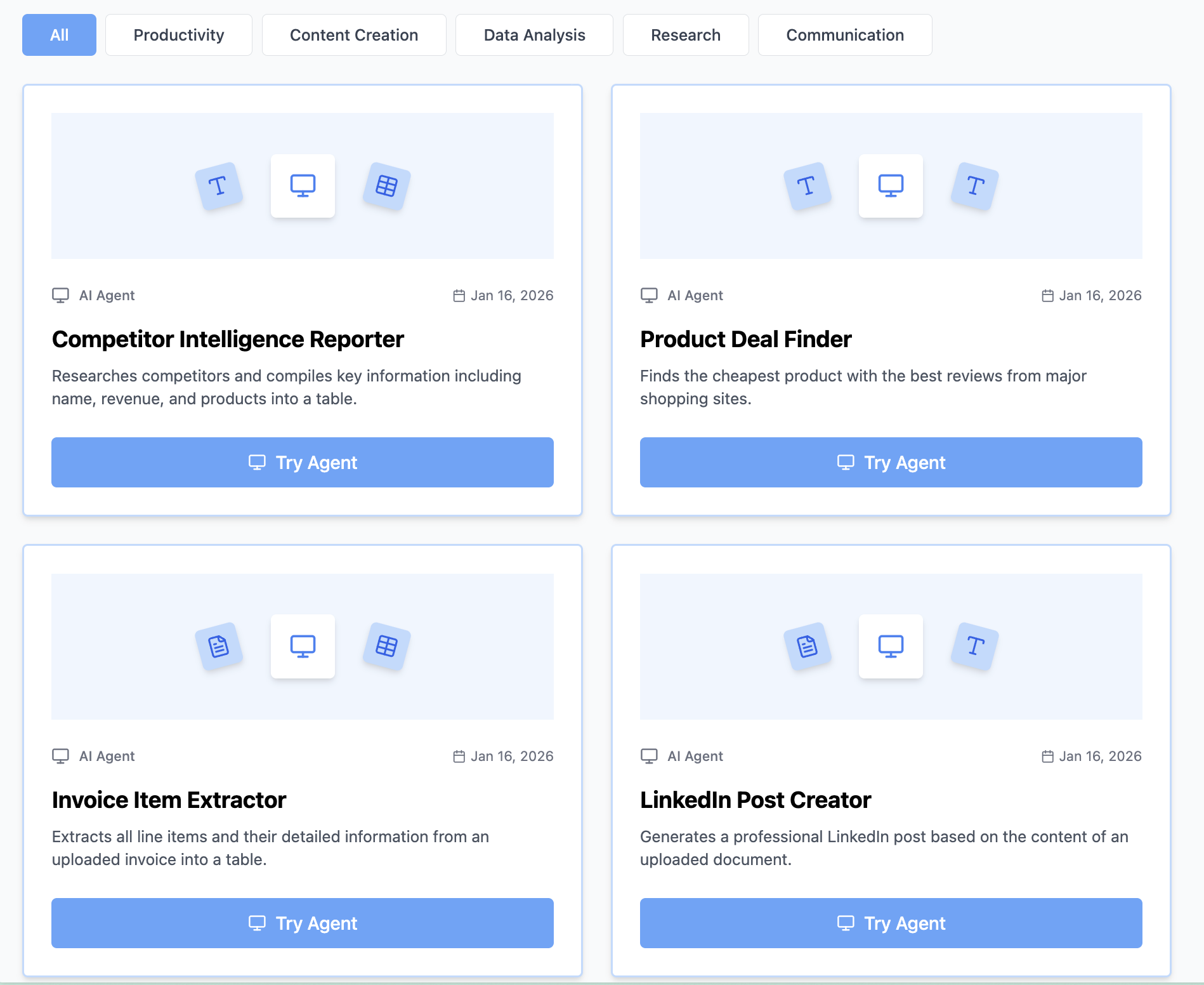
Think Miskies AI can't create the AI tool you need?
Tell us and we'll build it for you for free.
Create Your AI Tool in 3 Simple Steps
Select Your Input
Choose from docs, text, Excel, links, or any data source.
Edit the Instructions
Tweak the AI's behaviour to match your subject, grade level, or grading rubric.
Use It & Share It
Run your tool instantly and share a link with your students or colleagues.
Simple pricing, serious upgrade
Start free. Go Pro whenever you want to use more. Prices in USD.
Free
Try it out, no card needed
- Access to 100+ AI study tools
- Limited use - 5 times / day
- Create limited custom AI tools
Pro — 1 month
Full access, billed monthly
- Elevated access to all AI tools
- Create unlimited custom AI tools
- Faster generation speed
- Priority support
- Cancel anytime
Pro — 3 months
Best value for a semester
- Elevated access to all AI tools
- Create unlimited custom AI tools
- Faster generation speed
- Priority support
- Cancel anytime
Pro — 1 year
Best price per month
- Elevated access to all AI tools
- Create unlimited custom AI tools
- Faster generation speed
- Priority support
- Cancel anytime